Blue Origin pauses space tourism flights to focus on the moon
The company is trying to take advantage of President Donald Trump's desire to return astronauts to the lunar surface by the end of his term.
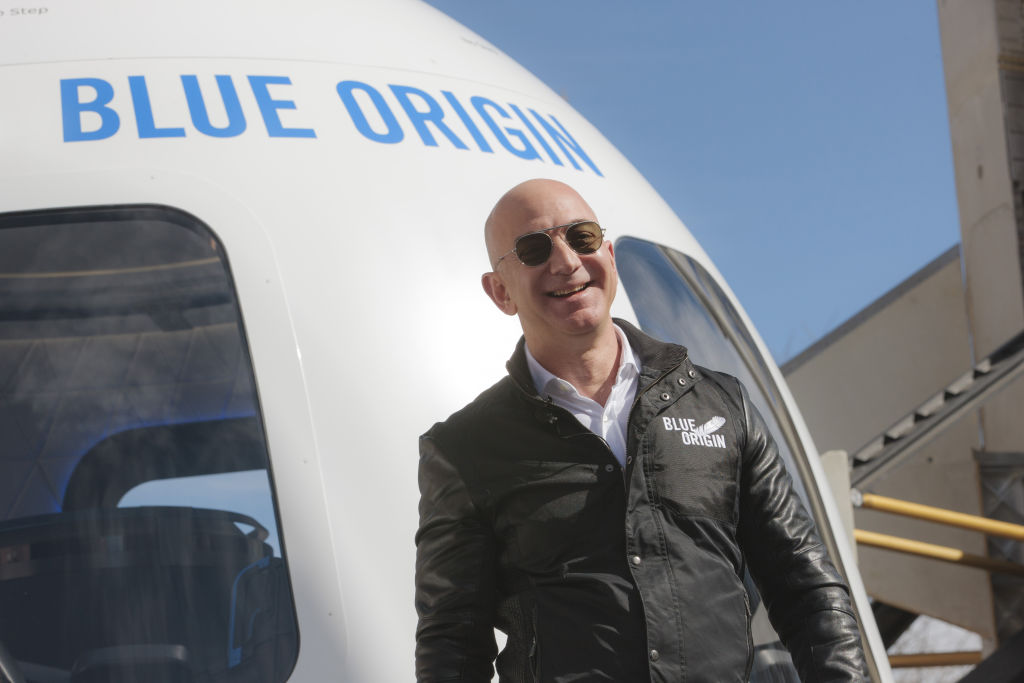
Jeff Bezos’ space company Blue Origin is pausing its space tourism flights for “no less than two years” in order to focus all of its resources on upcoming missions to the moon, the company announced Friday.
The decision puts a temporary halt on a program that Blue Origin has been using to fly humans past the Kármán line, the recognized boundary of space, for the last five years.
Blue Origin made the announcement just a few weeks ahead of the expected third launch of its New Glenn mega-rocket, which is slated for late February. The company had previously suggested it was going to use the third New Glenn launch to send its robotic lunar lander to the moon, but that spacecraft is still undergoing testing at NASA’s Johnson Space Center in Texas.
Since retaking office, President Donald Trump has put pressure on NASA to send astronauts back to the moon before the end of his second term. That has cleared the way for companies other than SpaceX to compete for these missions.
“The decision reflects Blue Origin’s commitment to the nation’s goal of returning to the Moon and establishing a permanent, sustained lunar presence,” the company wrote Friday.
Blue Origin first flew the New Shepard rocket more than a decade ago, and it became the first rocket to go to space and safely land back on Earth. Unlike SpaceX’s Falcon 9, though, the New Shepard rocket was never intended to reach Earth orbit. Its utility has therefore been limited to space tourism flights, which allow passengers around four minutes of weightlessness in Blue Origin’s space capsule, and science missions.
The company said Friday that New Shepard has flown 38 times and carried 98 humans to space, along with more than 200 scientific and research payloads.
The New Shepard program was previously paused in 2022 after one of the company’s boosters exploded mid-flight. There were no humans on that flight, and the capsule safely ejected away from the booster. But New Shepard remained grounded until late 2023 while Blue Origin worked on identifying and fixing the cause.
When you purchase through links in our articles, we may earn a small commission. This doesn’t affect our editorial independence.
Sean O’Kane is a reporter who has spent a decade covering the rapidly-evolving business and technology of the transportation industry, including Tesla and the many startups chasing Elon Musk. Most recently, he was a reporter at Bloomberg News where he helped break stories about some of the most notorious EV SPAC flops. He previously worked at The Verge, where he also covered consumer technology, hosted many short- and long-form videos, performed product and editorial photography, and once nearly passed out in a Red Bull Air Race plane.
You can contact or verify outreach from Sean by emailing sean.okane@techcrunch.com or via encrypted message at okane.01 on Signal.
Scale faster. Grow your portfolio. Gain practical expertise. No matter your goal, Disrupt can empower you.Save up to $330 today!
Librarians are hosting viral ‘Avoiding AI’ workshops for people who are fed up with Big Tech
SpaceX launches new V3 Starlink satellites but suffers another booster failure
Prentis, new AI lab co-founded by Reid Hoffman, Mark Pincus in talks to raise $100M
US accuses American of allegedly wiping his phone using a ‘duress’ password during border search
Anduril reportedly in talks to raise funding at $100B valuation, more than 3x last year’s mark
OpenAI makes ChatGPT Health available to all US users