
Intel CEO Sends Strong Signal to Nvidia: “We’re Building GPUs”
Intel CEO Lip-Bu Tan has announced plans to build GPUs, sending a clear signal to Nvidia. The company hired Eric Demmers as chief GPU architect to lead the effort, focusing on data center applications. Despite challenges in its CPU business and ongoing memory chip shortages, Intel is strengthening partnerships — including with Nvidia — to compete in the AI-driven semiconductor market.

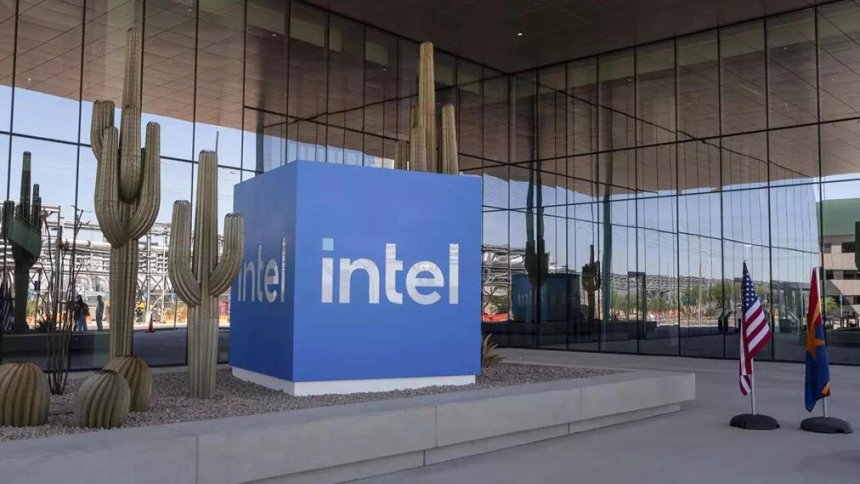
Intel CEO Lip-Bu Tan has made a bold announcement aimed at rival Nvidia, revealing plans to enter the GPU market — a segment that has powered Nvidia’s meteoric rise in the AI era. Speaking at the Cisco AI Summit, Tan confirmed that Intel will begin producing GPUs, marking a strategic shift from its traditional CPU dominance.
Intel’s GPU Ambition
Tan emphasized that GPUs, unlike CPUs, are designed for parallel computing and are critical for AI training, gaming, and high-performance computing. While Intel has long specialized in CPUs, the company now aims to compete directly in the GPU space, targeting data centers as its primary market.
Hiring of Chief GPU Architect
In January, Intel hired Eric Demmers, a veteran from Qualcomm with over 13 years of experience, as SVP of GPU Architecture. Demmers will report to Kevork Kechichian, EVP and GM of Intel’s Data Center Group. Tan noted that persuading Demmers to join was a significant win for Intel’s GPU ambitions.
Intel’s Challenges and Partnerships
Intel has struggled in recent years with its foundry business and misjudged demand for data center CPUs. CFO David Zinsner admitted shortages would hit their lowest point in Q1 before improving later in the year. Interestingly, Nvidia is both a customer and shareholder of Intel, having invested $5 billion in 2025. The two companies are collaborating to integrate Intel CPUs with Nvidia’s AI chips.
Memory Chip Shortage Concerns
Tan also warned of a global memory chip shortage lasting until at least 2028, driven by surging demand from AI infrastructure. This shortage is expected to impact traditional computing and smartphone markets, leading to higher prices and constrained supply. Major memory producers include Samsung Electronics, SK Hynix, and Micron Technology.
Why It Matters
Intel’s entry into the GPU market signals a direct challenge to Nvidia and AMD, as GPUs are now central to AI innovation. With new leadership, strategic hires, and partnerships, Intel is positioning itself to regain relevance in the semiconductor race, even as it navigates supply chain challenges.
Share
What's Your Reaction?
 Like
0
Like
0
 Dislike
0
Dislike
0
 Love
0
Love
0
 Funny
0
Funny
0
 Angry
0
Angry
0
 Sad
0
Sad
0
 Wow
0
Wow
0