‘Good translation? For whom’: Vivek Shanbhag on India’s loudest literary story

Translation, once the province of specialist audiences, was a topic of conversation at the 2026 Jaipur Literature Festival with good reason. Translated books now circulate everywhere, on national and international prize lists, and on stages where English has become the lingua franca for discussing languages that are anything but.
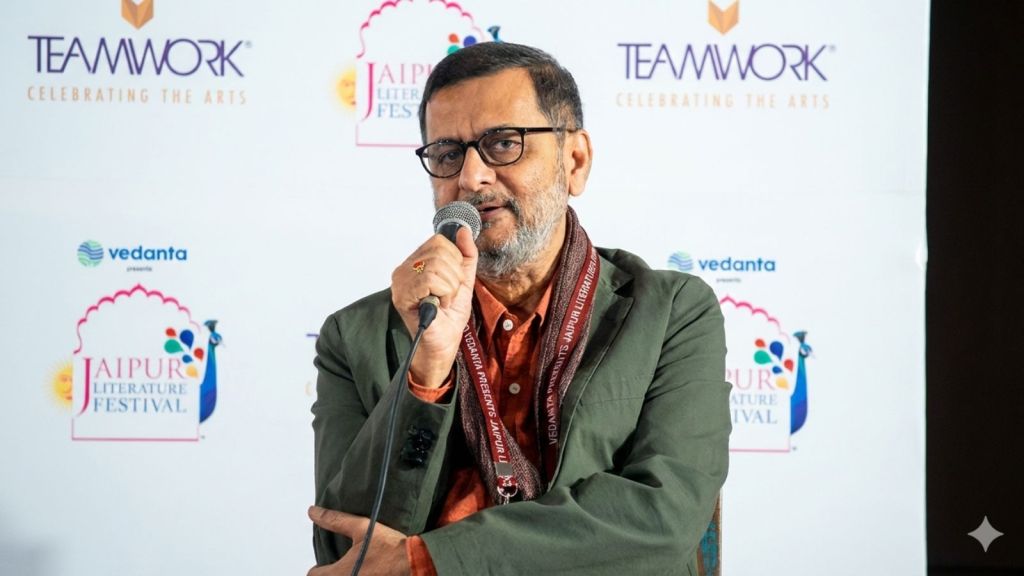
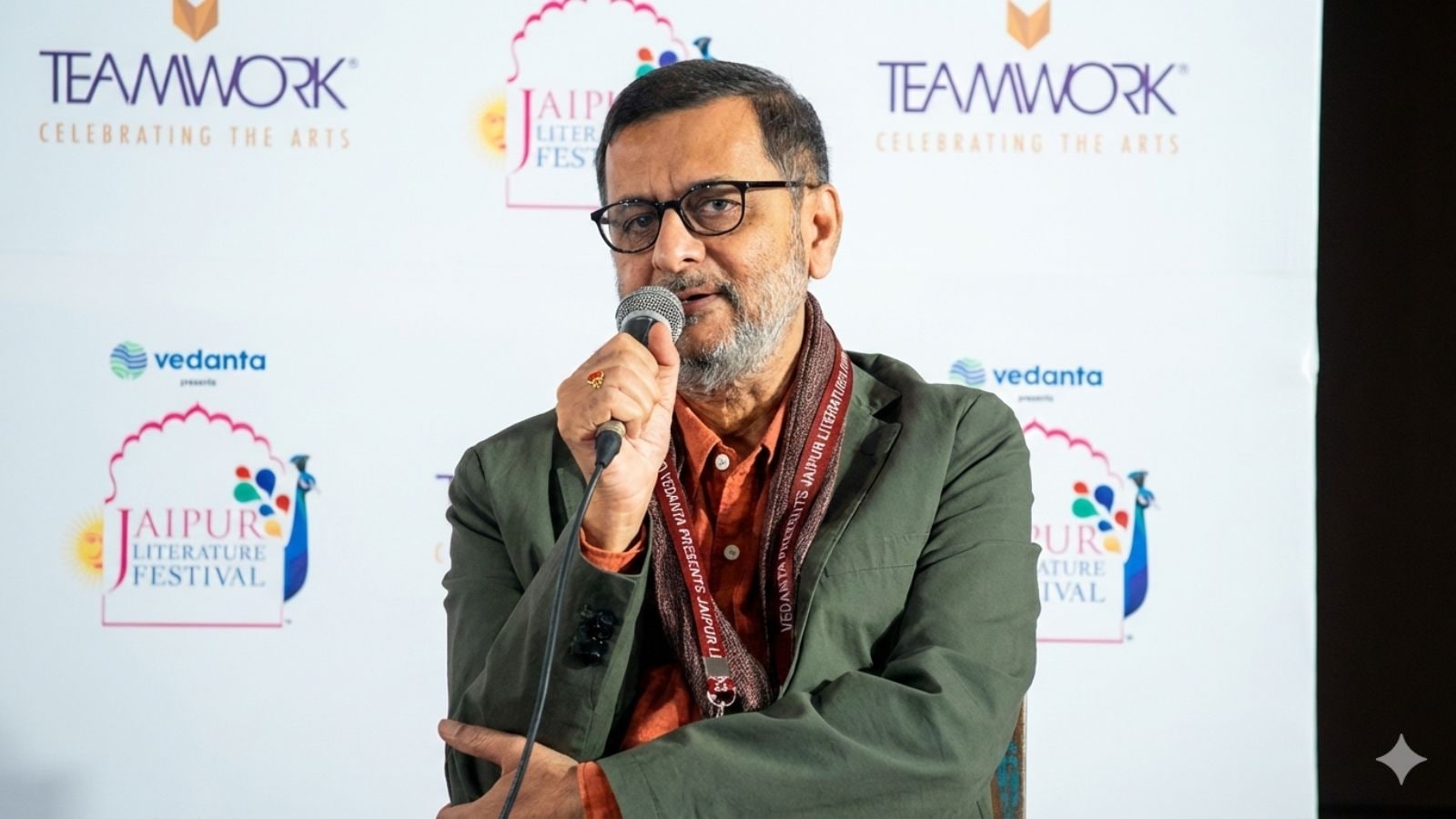
The idea that India’s translation moment has arrived without an architecture to hold it was the subject of ‘Hyphenated Worlds’, one of the festival’s headline sessions, where critic and translator Rita Kothari was joined by acclaimed Kannada writer of Ghachar Ghochar Vivek Shanbhag, and one of India’s most prolific translators Arunava Sinha. All three agreed that Indian literature in English translation is thriving and internationally visible, but they felt that the boom had outpaced its own thinking.
“We all know there is a lot of translation happening,” Kothari said. “This is exciting and dizzying, but there is something chaotic about the whole landscape.” There is a sense that everything must become prize-ready and tangible.
“There is an enormous amount of effort being put into bringing Indian-language literature into English,” said Shanbhag. “But what is lacking is a narrative around which one can hang these translations.” Without such a narrative, translations arrive as isolated achievements rather than a shared literary field.
Harkening to Europe, Shanbhag said, multiple languages coexist within shared theoretical and critical frameworks. Translation there functions as a conversation between traditions. “In India,” he said, “there is no conversation happening – or has ever happened –between languages through their translations into English.”
Writers may respond to one another personally, but institutionally the dots remain unconnected. The absence of cross-linguistic dialogue is a structural flaw.
The consequences of this incoherence are most visible at the level of readership. Ask a reader what ‘Indian literature’ means, and Shanbhag said, the question collapses. This has less to do with India’s diversity, and more to do with translations arriving without editorial or curatorial work that allows readers to move laterally across regions, histories, and sensibilities.
Too often, he argued, publishers privilege recognition over all else. “Publishers go by the name rather than an in-depth engagement with the literature,” he said. In practice, this means translators frequently function as de facto curators. “Most of the time, it is the choice of the translator. If a translator likes a work, they pick it up. There is no publisher strategy for this.”
On why such strategies rarely exist, Arunava Sinha said, “Big publishers are driven by their P&Ls (profit and loss). The question is not whether a language or a writer needs sustained representation, but how many copies the last translation sold.”
Translators hear this all the time, he said. For instance, ‘your last book sold seven hundred copies. We are not publishing this writer again.’ The result is that the he same author appears in translation from multiple publishers, while vast literary terrains remain untouched.
“Each publisher feels there are readers out there,” Sinha said, “and I should be the one whose translation it is.” No one, however, commits to building a writer, or a language, over time.
“A translated book is very different from a book originally written in English,” he said. “There is a writer, a translator, and an editor. All three have to be in continuous conversation.”
Yet in large publishing houses, editors may spend only weeks on a translated manuscript. “It is not enough,” he said.
Kothari asked what translations actually did to the understanding of a region, an archive, or a literary tradition? Has the boom created intimacy between linguistic communities? She recalled a time when Gujarati and Marathi were spoken of as bhagini bhashas (sister languages). That intimacy, she felt, had been replaced by competitive visibility and award-driven aspiration.
“There’s a neoliberalness to the whole enterprise,” she said. “Something is a little off.”
It is against this backdrop that Shanbhag co-founded Hyphen, which includes a biannual, print-led literary magazine devoted exclusively to translations from Indian languages; a publishing house focused only on translation; and a digital platform for workshops and conversations.
The initiatives advisory council brings together Namita Gokhale, co-director of the Jaipur Literature Festival; Geetanjali Shree, whose Tomb of Sand won international acclaim; Tamil writer Perumal Murugan, Malayalam writer KR Meera, Hansda Sowvendra Shekhar, known for writing from tribal and marginalised perspectives; Christopher Merrill, director of the International Writing Program at the University of Iowa; and Sudhir Sitapati, among others.
“These writers have already been discovered and read in their own languages,” Shanbhag said. “To say I have discovered them would be arrogant. What we are trying to do is discover them afresh in English.”
That act of rediscovery takes time, sometimes up to 18 months for a single book.
The discussion also touched on was an unresolved question about English itself. Once translators worried whether English could convey the affective density of Indian languages, Shanbhag said, now the risk is that English would shape literature toward external expectations.
“When you say ‘good translation,’” he asked, “good for whom?”
Aishwarya Khosla is a senior editorial figure at The Indian Express, where she spearheads the digita... Read More