JNUSU calls for VC’s resignation after her ‘casteist’ statement: ‘Can’t permanently play victim card… Was done for Blacks, same was brought for Dalits here’
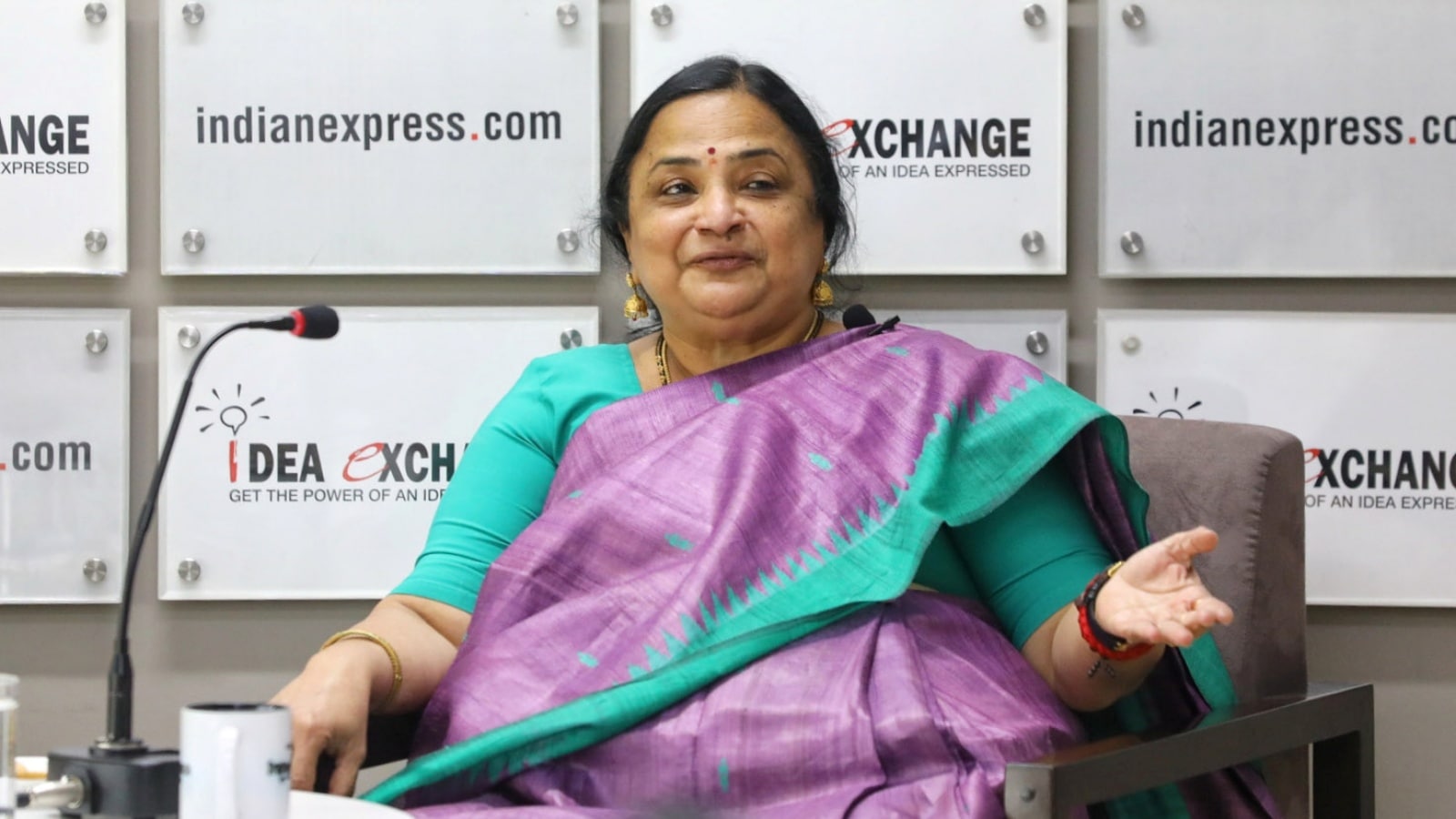

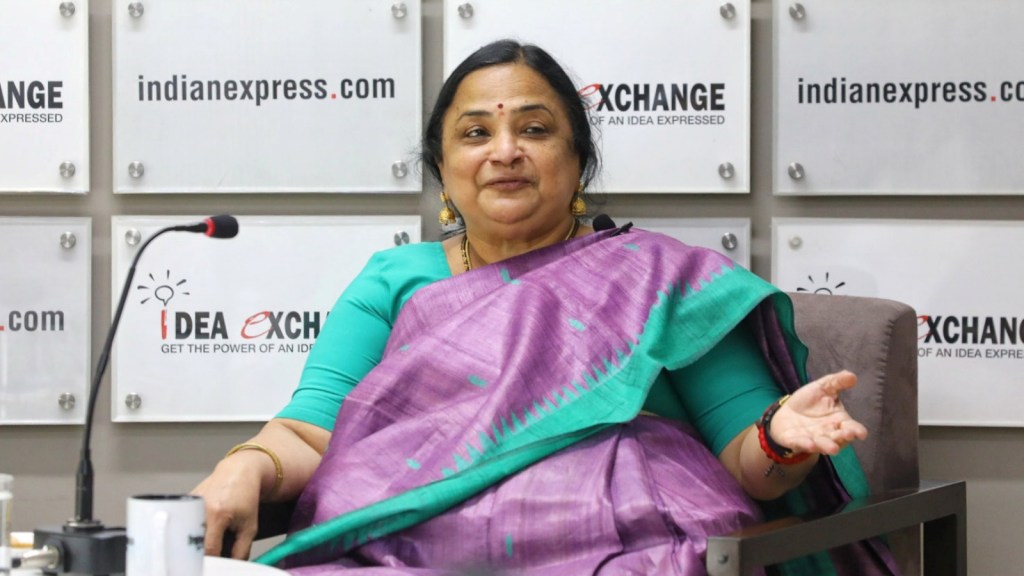
The Jawaharlal Nehru University Students’ Union (JNUSU) on Friday (February 20) demanded the resignation of Vice Chancellor Santishree Dhulipudi Pandit for making allegedly “blatantly casteist statements” during a media interview published this week.
The union pointed to the VC’s criticism of the new equity regulations notified by the University Grants Commission, which she described in the interview as being “totally unnecessary”, “irrational”, and “wokeism”.
“You cannot progress by being permanently a victim or playing the victim card. This was done for the Blacks; the same thing was brought for Dalits here…,” Pandit said.
The UGC (Promotion of Equity in Higher Education Institutions) Regulations, 2026, which was notified on January 13, sought to address discrimination, including caste-based discrimination, in higher education institutions. The Supreme Court stayed the regulations on January 29, saying they could trigger “very sweeping consequences” and had the potential to “divide society”.
“We are shocked at the blatantly casteist statements made by the VC on a podcast,” JNUSU said, alleging that Pandit’s remarks reflected “the chronology of injustice, caste supremacy, and perpetual systemic exclusion in universities and public spaces”. The union has called for a “national protest day” on Saturday (February 21) to call for Pandit’s resignation.
The VC made the statements during a 52-minute interview given to The Sunday Guardian, which was published as a podcast on February 16. She spoke at length about student protests on campus, the recent rustication of JNUSU office bearers, and the role of the Left in JNU, apart from the now-stayed UGC equity regulations.
The Indian Express reached out to Vice Chancellor Pandit and the university’s media officials for an elaboration of her comments during the interview and a response to the accusations made by the students’ union, but received no response.
Media officials at the university directed this newspaper to the statements given by the Vice Chancellor to the news agency PTI for this report.
During the interview, Pandit defended the JNU administration’s decision to rusticate five student leaders over the vandalism of surveillance equipment at the university’s Ambedkar Library.
“They destroyed this property, literally broke it down, sat on top of it, took pictures and they themselves put it on social media as though they have done something great,” she said.
“We charged them (students) under the Public Destruction of Public Property Act, which is a very strong Act,” she said, apparently referring to The Prevention of Damage to Public Property Act, 1984. “If they do it anywhere outside, it is jail without bail,” she said.
The administration, the VC said, had in fact shown restraint: “We have just debarred them for two semesters…and imposed a Rs 20,000 fine, which is not even one per cent of the public property destroyed. It is taxpayers’ money. I am answerable as a Vice-Chancellor to the government, to Parliament, and to the people of India.”
Pandit repeatedly stressed the need to impose consequences on students. “Every action has an equal and opposite reaction. Choices have consequences,” she said, adding, “I don’t want civil servants who are so irresponsible.” JNU has a rich tradition of producing IAS and other Class I government officers.
On the UGC equity regulations, Pandit said: “It was done secretly. Many of us who are part of the system didn’t even know what was in it… It was totally unnecessary.”
“An equity regulation cannot be unequitable. You cannot give powers to one group and deny the other group justice. This goes against the Constitution of India,” she said.
“This is like aa bail mujhe maar,” Pandit said, using a colloquialism that means bringing unnecessary troubles upon oneself. “Both the open categories are angry and so are the reserved categories saying that you have not implemented it,” she said.
In its statement issued on Friday, JNUSU also objected to Pandit’s proud identification with the Rashtriya Swayamsevak Sangh (RSS) and its worldview.
Asked by the interviewer how her association with the RSS had shaped her worldview, Pandit said: “I think rather it has given me a strong cultural pride… See, I came from the South, I used to go for my national camps of the RSS Sevika Samiti very early in school, at that time I came to know there are people from other states who are quite different but, at the same time there is something that pulls us together, so this appreciation for difference and diversity…”
“[Whenever] Any calamity took place it was this organisation (RSS) that was the first to go there and they never discriminated… At the time they didn’t even have political power…and they literally did a lot of social service which was totally community-driven and social-driven… Caste-wise they never asked you your identity… I think there are a lot of myths that have been woven against them which I think should be dispelled so I’m very proud because it gave me a worldview that was universal as well as unique,” Pandit said.
In her statement given to PTI, Pandit rejected the accusation that her remarks were casteist. “I did not mean that,” she told PTI. “I meant that wokes have written history like this. And those who opposed wokes had this to say about permanent victimhood and imaginary worlds being created,” she said.
“I am a Bahujan myself, I come from an OBC background,” Pandit said.
Pandit told PTI that excerpts from the podcast had been taken out of context. “When UGC regulations were criticised, the whole controversy was unnecessary, and there is suspicion that due diligence was not put into place. This is the perception,” she said.
Vidheesha Kuntamalla is a Senior Correspondent at The Indian Expre... Read More