FSSAI Food Labelling Rules: 100% Claims and Energy Drinks
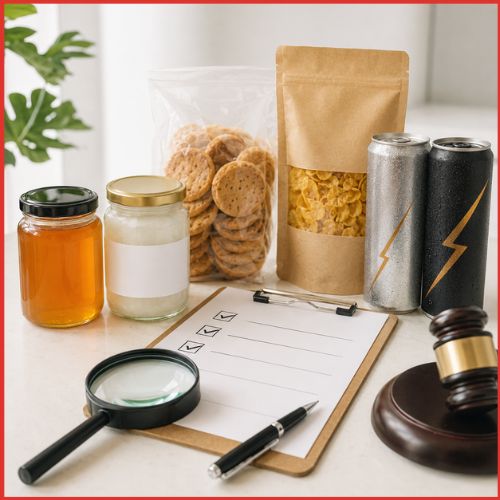
The Food Safety and Standards Authority of India has taken action against businesses using terms such as “100% pure”, “100% natural” and “energy drink” where the wording may mislead buyers or does not fit a recognised product standard. Six companies, including Amway India, Emami, Bonn…
After the regulator’s intervention, the company confirmed that it had removed the term from its packaging and promotional material. It also informed FSSAI that older stock carrying the claim had been taken out of sales channels.
Emami revised the claim used for Zandu Honey, while Apis India made a similar change to its honey products. The regulator’s concern is that these words can create a stronger impression than the facts on the label support.
What Happened
Under the Food Safety and Standards Regulations, labels cannot carry information that is false, deceptive or likely to create the wrong impression about a food product. Packages must also state the true nature of the food they contain.
The Food Safety and Standards Authority of India has taken action against businesses using terms such as “100% pure”, “100% natural” and “energy drink” where the wording may mislead buyers or does not fit.
Six companies, including Amway India, Emami, Bonn Biscuits, Apis India, Juza Foods and Masterchow Foods, have withdrawn or changed “100%” claims following notices from the regulator.
Amway India had marketed one of its products as “100% Pure Coconut Oil”.
Key Details
FSSAI has questioned the use of “energy drink” on products sold by companies including PepsiCo, Red Bull, Monster Beverage, Reliance Consumer Products and other manufacturers. It has also objected to promotional language suggesting that the beverages improve focus, fight weakness or deliver.
The action follows an advisory issued by FSSAI in May asking food companies to stop using absolute expressions such as “100%”, “100% pure” and “100% natural” when they cannot be clearly established under food.
A product described as “100% natural”, for example, may lead a customer to assume that it has no additives or has been processed in a particular way, even when the phrase has no clear.
Retail sales of such beverages in India are estimated to be growing by 12.6% a year, faster than in the United States and China.
Why It Matters
Companies were given 90 days to remove the disputed term and similar descriptions. Beverage manufacturers sought more time, arguing that millions of cans and bottles were already in shops, warehouses or pending import orders.
Sales nearly doubled between 2018 and 2023 and reached about 907 million litres last year, equal to more than three billion bottles or cans.
Six companies have already changed “100%” claims, while high-caffeine beverage makers face a 90-day deadline over the use of “energy drink” and related promotional language.
What Reports Say
Coverage of the story so far points to:
Continued reporting by Business Outreach Magazine as more details emerge