Social Commerce To Reshape Toy Retailing
From Factory to Feed: Global Toy Market in Impacts in 2026 BY NIC JONES For…

From Factory to Feed: Global Toy Market in Impacts in 2026

BY NIC JONES
For decades, the global toy industry has been built around a predictable structure: develop a product, secure retail distribution, support it with marketing, and hope shelf presence converts into sales. That model is not disappearing, but it is no longer sufficient on its own.
Social commerce is rapidly becoming a parallel, and increasingly powerful, route to market. For toy companies operating globally, it represents not simply a new sales channel, but a fundamental shift in how products are discovered, validated, and scaled.
The next twelve to eighteen months will be critical. Brands that treat social commerce as experimental risk being overtaken by those that embed it into their core commercial strategy.
Social Platforms Are Becoming Marketplaces
By 2030, global social commerce is forecast to exceed $8 trillion. Growth is being driven by platforms that collapse discovery, entertainment, and checkout into a single experience. Consumers are no longer browsing a website after seeing an advert. They are buying instantly, in a moment of inspiration, without ever leaving the app.
For toys, this is particularly powerful. Play is visual, whilst demonstration and emotion really matter. A short-form video can now do what a full retail endcap once did: show play patterns, trigger desire, and convert interest into purchase instantly. And that doesn’t take into consideration the inherent power of live streaming.
This is not about replacing retailers. It is about recognising that the consumer journey now often starts, and sometimes ends, in the feed.
What This Means for Toy Companies
Social commerce shifts influence upstream. Instead of relying solely on retail buyers to validate products, brands can test concepts directly with consumers at speed.
This has several implications for global toy businesses:
- Faster validation: Product ideas can be tested through content before committing to large production runs.
- Shorter feedback loops: Engagement data offers real insight into what excites consumers, not months later, but in real time.
- Story-led selling: The narrative around a toy, how it is played with, why it exists, becomes as important as the product itself.
In many cases, social commerce is not cannibalising retail sales. It is acting as a demand engine, increasing awareness and confidence before shoppers ever reach a store.
From Campaigns to Communities
Traditional toy marketing has been campaign-driven: big moments tied to launches, seasons, or licenses. Social commerce rewards a different mindset, with always-on storytelling and continuous engagement building community over time.
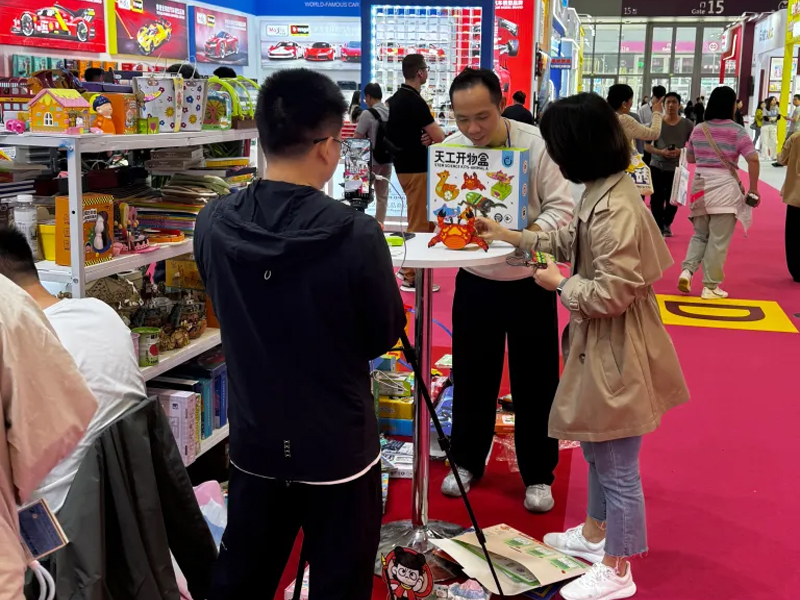
Brands that succeed in social commerce understand that content is not advertising in the old sense. It is participation in culture. Behind-the-scenes footage, factory visits, designer insights, and playtesting moments all contribute to a sense of authenticity that modern consumers expect.
For global brands, this also creates opportunities for localisation. Content can be adapted for regional markets without reinventing the product itself, allowing cultural relevance to scale faster than traditional media buying ever allowed.
Furthermore, the markets are now more flexible than ever. Short term fads and crazes can be adopted faster. Toy companies are going to have to learn and adapt to the new realities and to become increasingly nimble.
The Rise of Collaborative Selling
One of the most underestimated aspects of social commerce is collaboration. Platforms allow third parties to sell products on a brand’s behalf through affiliate systems. In practice, this means educators, collectors, parents, and content creators can become part of the sales ecosystem. They become your storefront. Instead of one central marketing voice, brands can activate dozens or hundreds of credible advocates, each speaking to a specific audience. For toys, where trust and demonstration are crucial, this model is especially effective.
The commercial logic is compelling: payment is tied directly to performance, and reach is driven by relevance rather than budget.
Why 2026 Matters
The infrastructure for social commerce is now in place. Platforms have solved checkout, logistics integration is improving rapidly, and consumer behaviour has shifted decisively.
For the global toy industry, social commerce is not a trend, or marketing ‘cost’, to observe and absorb. It is a commercial discipline to master. And excitingly the playing field has been levelled – this is an opportunity for everyone!
What has not yet fully settled is competitive positioning. The brands that invest in capability, partnerships, and understanding now will define best practice for the next decade. Those that delay may find themselves reacting to competitors who have already built audience loyalty and data insight that cannot be bought later.
The question for 2026 is not whether toys will sell through social platforms, but which brands will lead, and which will be forced to follow.
Nic Jones is a social commerce and brand strategist working across toys, licensing, and family entertainment. He is the founder of SituAction, advising businesses on social-first commercial strategy, and the founder of Shout About, a social-first marketplace connecting brands, creators, and communities through commerce. He can be contacted at nic@situaction.co.uk
Share
What's Your Reaction?
 Like
0
Like
0
 Dislike
0
Dislike
0
 Love
0
Love
0
 Funny
0
Funny
0
 Angry
0
Angry
0
 Sad
0
Sad
0
 Wow
0
Wow
0